
Anguillara, August 21, 2025
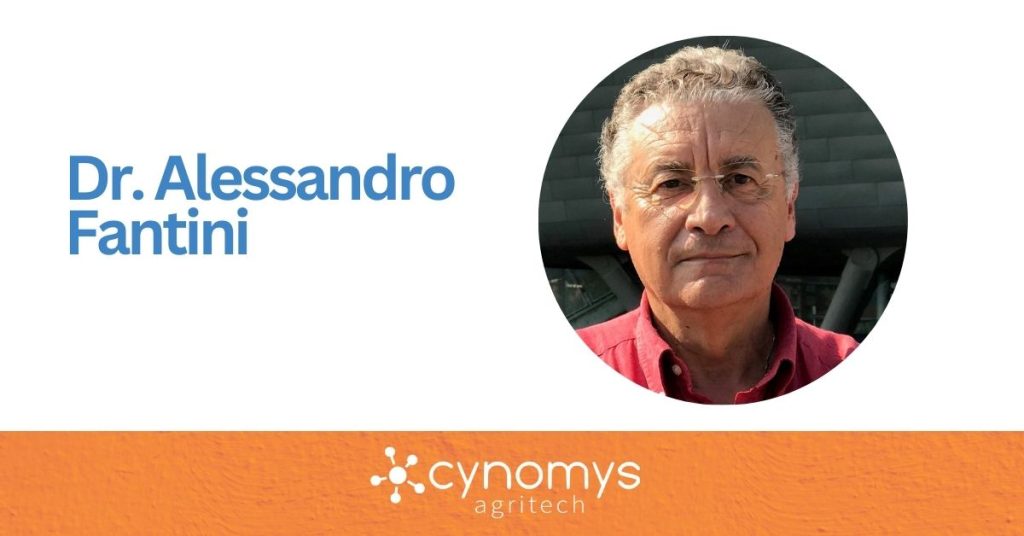
A veterinarian with over forty years of experience, specialized in dairy production medicine, Dr. Alessandro Fantini has closely followed the evolution of Italian livestock farming. With him, we discussed genetics, animal welfare, air quality, sustainability, and the future of the veterinary profession.
Over the years working closely with farms, what has been the most evident change you’ve seen in the relationship between barn environment and animal health?
In the more than forty years of my veterinary career, specializing in dairy production medicine, I’ve witnessed a dramatic shift: genetics has clearly overtaken management, environment, health, and nutrition in importance and impact. At the beginning of my career, it was evident how a good diet, a proper environment, and careful management could significantly improve animal performance.
Today, however, genetic selection has made such a leap in quality that it has created “new” cows: animals that, although similar in appearance to those of the past, impose very specific conditions. In other words, if the levels of nutrition, management, and environment they require are not guaranteed, the farm’s economic sustainability collapses quickly. That’s why the space in which they live must be wide and comfortable; parameters such as THI, air quality, and lighting must be carefully monitored, and the staff responsible for care and management must be highly trained and constantly updated.
There is a lot of talk about nutrition and genetics, but less about air quality. From your experience, how important really are parameters such as ammonia, fine dust, and CO₂ in the daily lives of animals?
I have not had the chance to gain direct experience on how those parameters might affect the quality of life and performance of animals. However, I can say without a shadow of a doubt that dairy cows in particular, now universally defined as “metabolic athletes,” engage in a demanding aerobic discipline that requires a high amount of oxygen and therefore extremely high-quality air.
Can you share a case where an “invisible” problem in the barn – perhaps related to ventilation or air quality – had significant effects on health or productivity?
Certainly. A few years ago, a farmer invited me to visit the farm he had just built with a great financial effort, where he had recently moved his dairy cows. It was a large barn equipped with the best that zootechnical engineering could offer. The barn had cubicle resting areas and excellent slatted flooring in the walking areas. Yet the farmer was desperate because, despite such a large investment to give the cows a better quality of life, these “ungrateful” animals spent the whole day standing, crowded in certain areas of the barn.
To keep the story short, I realized that due to incorrect installation of the horizontal fans, gases from the slurry pits under the slatted floor were stagnating. This was only perceivable by cows lying in cubicles or by a person crouching a few decimeters from the ground. One thing, however, is certain: dairy cows do not do what harms them. This applies to both feeding and the environment in which they live.
Summers are becoming longer and hotter. As an expert, what do you observe most in animals under heat stress? And which solutions have you seen work best in practice?
The climate is changing rapidly, as we can see from the trends in average, minimum, and maximum temperatures and the frequency of extreme events. I’ve written many articles on this subject, recommending to cooling-system manufacturers, farmers, and veterinarians alike to carry out barn diagnostics to verify whether the system in place can effectively prevent heat stress. Today we have the technologies and knowledge to objectively understand if animals’ body temperature remains normal throughout the day, as well as their respiratory rate and feed intake.
Today almost everything can be monitored in real time. From your point of view, and clinically, does having constant data on microclimate and animal welfare make a difference compared to traditional observation?
Absolutely yes. I believe the new frontier for assessing the welfare—or rather, the quality of life—of farm animals lies in using technologies that monitor specific clinical parameters across all animals, or at least a statistically significant group. I am very skeptical about subjective evaluation tools such as checklists to address such a complex and sensitive issue, which also involves public opinion.
Artificial intelligence and predictive systems are increasingly discussed. Do you see them as tools that can assist veterinarians, or do they risk replacing certain skills?
Absolutely not. Farms are getting larger and the volume of individual and collective information collected by sensors—and directly by farmers, veterinarians, and animal scientists—has become enormous and unmanageable. Algorithms and AI are more than welcome to detect both individual and collective anomalies to be flagged for the attention of those with management responsibilities on the farm.
In France, consumers find on labels a welfare score from A to E (the much-discussed Nutri-Score). How do you see this form of communication? Would it be a help or an obstacle for Italian farms?
The culture of scores and traffic-light labels is typically Anglo-Saxon and far removed from that of other Western countries and the rest of the world. Surely, it could be helpful to indicate on the label the farming method, which would help consumers make informed purchases and deal a blow to certain animal-rights rhetoric calling for the closure of intensive farms without knowing exactly what they are and how they differ from non-intensive farms.
Perhaps the greatest problem for those delegated to decide is that the language of public opinion is very different from that used by primary production. Unfortunately, such a complex and crucial issue for the future of animal-based foods is often addressed with misinformation and ideological polarization.
There’s more and more talk about farms capable of “giving back” to the environment, improving soils and biodiversity. As a specialist, do you think this is utopian or a concrete path?
Ruminant farming is deeply integrated with the environment: it uses feed that monogastric animals cannot digest, such as fibers, and it makes use of by-products and food waste, giving back high-value proteins for human nutrition. Moreover, through manure, it contributes to renewable energy production and provides digestate, an organic-rich fertilizer useful for soil fertility. This is a concrete and daily reality, but what’s often lacking is the ability to communicate it simply and clearly to people.
Many farmers see sustainability as a cost. Can you give us an example of when improving animal welfare translated into a real economic advantage?
Environmental, social, and economic sustainability is not a cost, but a high-return investment (ROI). Ensuring animals the best conditions for feeding, health, and welfare allows them to fully express their genetic potential, reaching maximum productivity, fertility, and longevity. However, today we are at a standstill: consumers are not yet willing to recognize added value—and thus pay more—for milk and meat produced more sustainably. In my view, the critical issue does not lie in the lack of virtuous behavior by many supply chains, but in the inability to communicate it clearly and convincingly. This is compounded by the proliferation of misleading messages that fuel confusion and distrust.
Looking ahead to 2035, what do you think will be the greatest challenge for veterinarians and animal health?
The challenges that veterinary medicine must face, and will increasingly face in the future, are many and complex. For this discipline to remain relevant and adequate in a constantly evolving world, it must be rethought from the ground up: from education to professional practice, just as has already partly happened in human medicine. One of the main issues is education itself. It is now difficult to accept that a single university curriculum can prepare students equally for all the countless branches of veterinary medicine.
Attending the same courses and taking the same State exam, only to work in such diverse fields as companion animals, livestock and sport animals, food safety, public health, or private health, is at the very least reductive. The truth is that there is a real “biodiversity” in veterinary medicine: methods, purposes, and goals change radically depending on whether one deals with pets, dairy cattle, sport horses, or food hygiene. Ignoring these differences means putting the future of the profession at risk and, consequently, depriving citizens and agri-food chains of the qualified support they increasingly need. Today there are master’s degrees, specialization schools, and postgraduate programs, but without addressing what I would call the “original sin” of veterinary education, all this remains only a marginal corrective. A structural reform is needed, one capable of recognizing the complexity and diversity of this profession.
Conclusions
From Dr. Fantini’s experience, it is clear that modern animal husbandry can no longer disregard an integrated approach combining genetics, management, technology, and sustainability. The future of farming depends on the ability to ensure animal welfare and value for farmers, while also communicating transparently with consumers. The challenge is great, but so are the opportunities: to build a resilient, competitive sector in harmony with society’s and the environment’s needs.