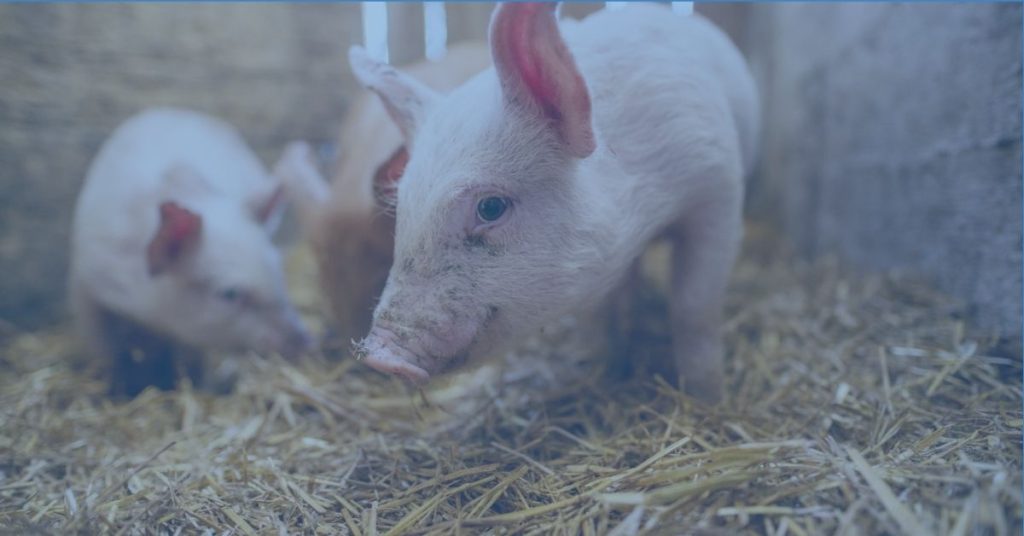
Imagine a swine farm immersed in the countryside: the smell of soil after the rain, the slow movement of the animals in the housing rooms, the silence broken by their vocalizations. An image that seems reassuring, but one that today coexists with an intense tension: African Swine Fever (ASF), which has imposed new rules, strict constraints, and the awareness that the farm of the future can no longer be the same as yesterday’s.
The constraint on repopulation: a necessary standstill
In areas classified as infection zones, the regulations impose a ban on introducing new swine until a predetermined date (in the current case, until October 15). The rooms remain empty, the cages inactive, the silences heavy: a constraint that affects the entire production cycle. Even those affected by an outbreak can only aspire to repopulate after completing a sanitary procedure, with the introduction of sentinel swine to monitor any remaining viral circulation.
It is a painful measure, but one dictated by health reasons: as long as the virus can hide in wildlife, caution remains the watchword.
Beyond the constraint: the ground for action
While repopulation is blocked, farmers still have active interlocutors: technological innovation, environmental management, preventive strategy.
Environmental monitoring and continuous detection
The real paradigm shift lies in transforming the barn into a living, reactive system. Today, advanced sensors make it possible to continuously detect dozens of environmental parameters — temperature, humidity, ammonia, fine dust. These data make it possible to build predictive indices (thermal stress, ventilation efficiency, disease risk) useful for intervening before damage occurs.
A farmer is no longer just a manager of animals, but becomes an interpreter of environmental data.
Smart automation and decisions based on predictive logic
It is not enough to measure: one must react. Modern farms integrate environmental data with automated systems that manage ventilation, cooling, shading, and feeding in an adaptive way. In this way, the barn responds automatically to changes: sudden heat, peaks of humidity, accumulation of gases.
Technologies do not replace the farmer; they support them: suggesting strategies, anticipating critical issues.
Biosecurity and protection from the outside
Even the space surrounding the farm becomes part of the defense. The presence of wild animals — especially wild boars — is one of the main risk factors for ASF. Containment measures (barriers, distances, wildlife control) must be designed in combination with internal monitoring. The most effective scenario is an integrated system that connects the external and internal environments in a single surveillance network.
Economic impacts: setbacks and levers
The constraint on repopulation is not a simple technical obstacle: it is a test of economic resilience for many companies. Losses result from incomplete herds, lack of production, fixed costs that remain. The urgency becomes clear: those who invest in preventive systems today can reduce the cost of emergency measures tomorrow.
Agreements and collaborations between consortia, trade associations, and technology providers aim to spread digital tools and monitoring solutions across the territory, lowering the adoption barrier for farmers.
From problem to vision: beyond the temporary block
A measure as drastic as the repopulation ban can be read as a strong signal: livestock farming can no longer exist as an isolated island. It must engage with the environment, technology, institutions, and science. This means:
A pact with science: the data collected must feed predictive models, refine algorithms, and guide experimentation.
An active network: farmers, technicians, institutions, and startups must collaborate as a learning community.
The value of transparency: consumers demand clearer ethics; products from monitored and controlled farms gain credibility.
Redundancy and resilience: do not rely on a single device or technology, but build redundancies and backups to withstand failures.
Conclusions
The constraint on repopulation is a necessary stop, but it must not become a prolonged agony: it is the ground on which to rethink farming. Companies that can look to the medium and long term — transforming barns into data laboratories, investing in surveillance and automation, building relationships with supply chains and institutions — will reopen with stronger, more resilient structures, ready to seize new opportunities.
Request a free demo to learn about our solutions for livestock welfare.