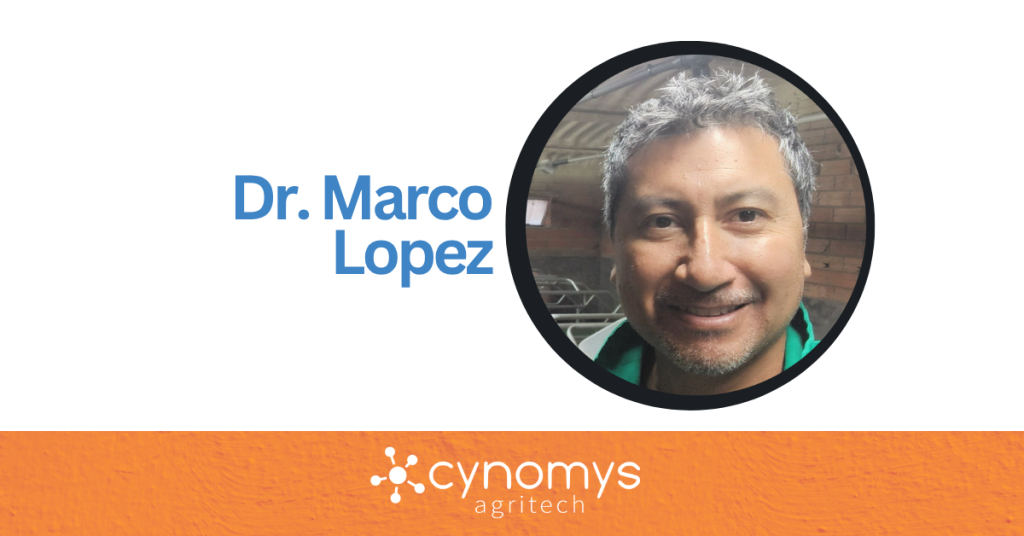
Interview with Dr. Marco Lopez
In recent years, the livestock sector has undergone a profound transformation, driven by technological innovation, evolving production demands, and increasing attention to animal welfare. While nutrition and genetics continue to dominate the conversation, less visible factors—yet equally critical—play a direct role in animal health and performance. Among these, barn microclimate and air quality stand out as key elements, often underestimated in daily farm management. To explore this topic, we interviewed Dr. Marco Lopez, Veterinarian and Associate Professor at the Autonomous University of Barcelona, who has worked closely with livestock farms across Europe for over thirty years. With him, we discussed how environment, technology, and sustainability are reshaping the future of animal health and production efficiency.
Over the years, working closely with livestock farms, what is the most evident change you have observed in the relationship between barn environment and animal health?
After 30 years of professional experience, I can say that the most important and evident change—very easy to observe—has been the shift from manually operated windows to automatic tilting windows controlled by sensors. With a healthier environment, animals suffer fewer respiratory problems and grow better.
There is a lot of discussion about nutrition and genetics, but less about air quality. From your experience, how important are parameters such as ammonia, fine particulate matter, and CO₂ in the daily life of animals?
That is true. In my view, air quality is something that should be monitored much more closely, ideally continuously. Excess gases, dust, and noise negatively affect not only animal behavior—such as aggression and tail biting—but also the entire organism, including the production of growth hormones, cortisol, oxytocin, prostaglandins, and more. It also impacts oxidative stress, which is linked to cellular aging and death.
Can you share a case where an “invisible” problem in the barn—perhaps related to ventilation or air quality—had significant effects on health or productivity?
Yes, exactly what I mentioned earlier. Pigs raised in a good-quality environment can grow better, reaching at least 5 kg more weight, with fewer treatments, lower mortality, and in less time, using less feed compared to animals raised in heavier, gas-laden air conditions.
Summers are becoming longer and hotter. As an expert, what do you most often observe in animals exposed to heat stress, and which solutions work best in practice?
It is clear that climate change, and therefore heat stress, is increasingly affecting farm productivity—feed intake, feed conversion ratio, daily weight gain, and sow replacement rates. Animals have been genetically selected for exceptional performance, but at the same time they have become more sensitive. Sometimes feed additives are used to mitigate heat stress, but when temperatures are too high, animals stop eating and drinking, so this is not always effective. Environmental control systems such as fans, humidifiers, and cooling technologies are widely used, but even these are not 100% effective unless properly regulated and optimized.
Today almost everything can be monitored in real time. From a clinical perspective, does having continuous data on microclimate and animal welfare really make a difference compared to traditional observation?
Absolutely. Everything that can be recorded can be evaluated, and this supports decision-making based on objective data. Early diagnosis and timely intervention are increasingly important. Prevention is always better and more cost-effective than treatment. Air quality directly affects the respiratory system, increases susceptibility to disease, impacts the digestive system, and influences overall animal welfare, including the nervous, immune, and endocrine systems.
There is growing discussion about artificial intelligence and predictive systems. Do you see them as support tools for veterinarians, or could they replace some competencies?
It must be clear that artificial intelligence, if used correctly, should help us perform tasks we cannot do alone or improve efficiency while reducing production costs. AI is already used on farms through sensors for humidity, temperature, and gases, feed monitoring systems, slurry fermentation control, piglet growth scanners, and image analysis systems to monitor sow welfare in group housing. However, some skills cannot be replaced, such as the sensitivity and experience of farmers and technicians who care for animals every day. AI can help us create the optimal environment so animals can express their full genetic potential without having to “defend themselves” from poor conditions.
In France, consumers can find animal welfare scores from A to E on labels. How do you evaluate this type of communication? Is it helpful or a barrier for farmers?
In Spain, similar certification systems are being developed. In my opinion, anything that adds value to the product, differentiates it from non-EU products, and allows producers to receive fair compensation linked to food safety, quality, and animal welfare is positive. If certification protocols also improve knowledge, control, management, and efficiency, even better. However, it is important that animal welfare certification does not become merely a marketing tool or a way for the industry to pressure farmers on price.
There is increasing discussion about farms that “give back” to the environment by improving soil and biodiversity. Is this a realistic path or just an ideal?
I believe it is absolutely achievable. Modern farms, if they use the right technologies, can provide many more benefits to society than they currently do: biogas, compost, biofuels, reduced antibiotic use, lower phosphorus and nitrogen emissions, and improved feed efficiency. What we often call waste can actually become valuable by-products when properly managed. This is the principle of the circular economy.
Many farmers see sustainability as a cost. Can you share an example where improving animal welfare translated into real economic benefits?
Sustainability is often associated only with the environment or animal welfare, but it also means that farmers can make a decent living. By creating the best possible environment—facilities, nutrition, and health—we can improve the productive lifespan of sows. This leads to more litters, more piglets, stronger animals with better immunity, improved growth, and more efficient feed use. In other words, we become much more efficient in resource utilization.
Looking ahead to 2035, what do you think will be the biggest challenge for veterinarians and animal health?
I believe it will be the progressive reduction in reliance on medication driven by regulations. Producers and technicians must work to transform a “sick” production system where rapid growth has compromised health and environment. Medicines should be used efficiently and only when necessary. Using them to compensate for poor management—especially antimicrobials—leads to failure. It is time to embrace both modern science, such as sensors and AI, and traditional knowledge like plant extracts and essential oils, which now have solid scientific support. If this means slowing down production slightly, then it is a positive step.
Conclusion
Dr. Lopez’s experience highlights a clear message: the future of livestock farming increasingly depends on our ability to control and optimize the environment in which animals live. Air quality, continuous monitoring, and intelligent use of technology—including artificial intelligence—are no longer optional, but strategic drivers of health, welfare, and productivity. At the same time, innovation does not replace human expertise; it enhances it. The sensitivity and experience of farmers and veterinarians remain essential, while data enables faster and more informed decisions. Ultimately, sustainability and profitability are not in conflict. Creating optimal environmental conditions leads to healthier animals, fewer treatments, better performance, and greater economic efficiency. The real challenge ahead will be finding the right balance between technology, scientific knowledge, and traditional practices to build a more resilient and responsible production system capable of meeting society’s expectations.