In recent decades, the pig farming world has undergone a profound transformation.
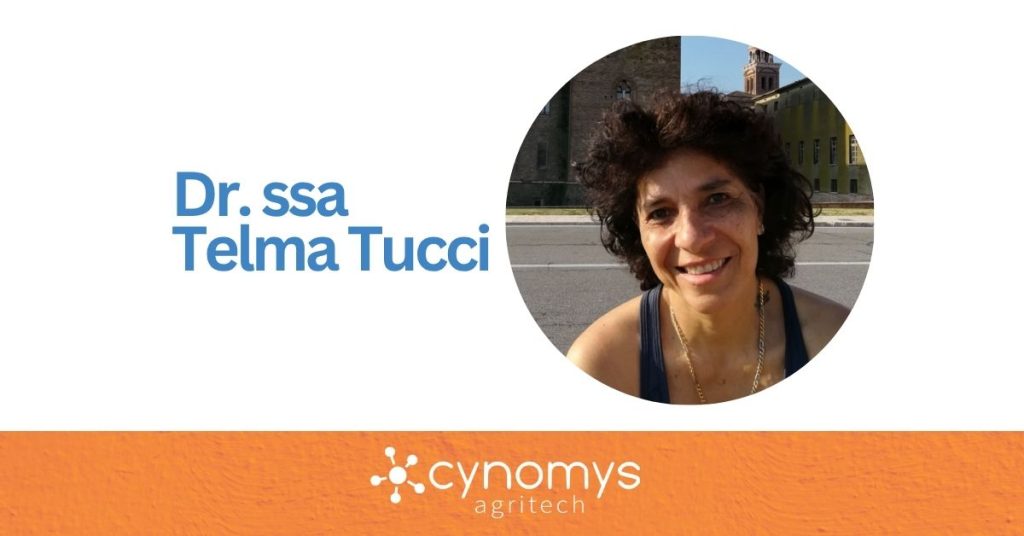
Technology, environmental awareness, and attention to animal welfare have revolutionized how farms are managed. But how much does the environment really affect the animals’ health? And how are the skills of field veterinarians changing? We discussed this with Telma Tucci, a professional with many years of experience in veterinary consulting for Italian farms, and a key figure at 3tre3, who has witnessed this evolution firsthand.
Over your years of working closely with farms, what has been the most evident change you’ve seen in the relationship between the barn environment and animal health?
The biggest change I’ve observed in these 35 years of work in Italy has been a greater awareness of the importance of a suitable environment. The introduction of new diseases, such as PRRS, has pushed farmers to look beyond the “pathogen.” Pig diseases are mostly multifactorial, where the environment and respect for the animals’ needs are fundamental.
There’s a lot of talk about nutrition and genetics, but less about air quality. In your experience, how important are parameters like ammonia, fine dust, and CO₂ in the daily life of animals?
Environmental parameters are certainly an integral part of the animals’ life and well-being. All these factors play an important role in the pig’s health, affecting everything from reproductive issues to growth.
Can you tell us about a case where an “invisible” problem in the barn—perhaps related to ventilation or air quality—had a significant impact on health or productivity?
A few years ago, we had a growth problem in a finishing unit. The animals weren’t expressing their full genetic potential, yet their health parameters appeared normal. The issue turned out to be poor air exchange, with high CO₂ levels—not alarming according to Classyfarm limits, but still enough to reduce oxygen supply to tissues and slow muscle growth. An invisible, yet very real problem.
Summers are getting longer and hotter. As an expert, what do you observe most in animals under heat stress? And which solutions have you seen work best in practice?
In practice, anything that improves the pig’s thermal comfort translates into benefits for health and welfare. Reducing humidity, ensuring proper ventilation, and using cooling systems—such as coolers—that help dissipate heat are the most effective solutions. Pigs have very few sweat glands, so the environment must help them maintain thermal balance.
Today, almost everything can be monitored in real time. From a clinical perspective, how does having constant data on microclimate and animal welfare change things compared to traditional observation?
Knowing in advance that a group of pigs is about to get sick because of a malfunction or an environmental problem can make the difference between a modern management approach and one still based only on visual experience. Human roles remain essential, but they must take on a new function: interpreting data and acting proactively.
Artificial intelligence and predictive systems are becoming more common. Do you see them as tools that can support veterinarians, or do they risk replacing some of their skills?
Anyone who believes that AI or other innovations can replace human figures—veterinarians or otherwise—hasn’t understood the direction we’re heading in. These are tools that support, not replace.
In France, consumers can find an A-to-E score on labels indicating animal welfare. How do you view this kind of communication? Would it be a help or a hindrance for those working in Italian farming?
Being aware of one’s choices is a right. However, reducing complex aspects such as nutrition, welfare, and sustainability to a single score risks being simplistic and reductive. We need transparency—but also balanced communication.
There’s increasing talk of farms capable of “giving back” to the environment, improving soil and biodiversity. From a specialist’s perspective, do you see this as utopian or a realistic path?
I know several pig farms where the environmental impact is now close to zero—or at least comparable to that of other productive activities. So no, it’s not utopian.
Many farmers see sustainability as a cost. Can you give an example of when improving animal welfare actually translated into an economic benefit?
I’m not a farmer, but I am an entrepreneur of myself. I never face a difficulty as a problem, but as an opportunity. While many farmers see sustainability as a cost and stay put, others are already taking action—and reaping the rewards.
Looking ahead to 2035, what do you think will be the biggest challenge for veterinarians and animal health: managing climate change, maintaining economic competitiveness, or integrating technology?
The challenges are interconnected. Maintaining competitiveness depends on integrating technology, which optimizes time and resources, generating economic benefits. At the same time, climate management is becoming a social issue that must be integrated with the other two.
Conclusion
Telma Tucci’s experience shows that animal welfare is no longer just an ethical issue, but a key element of efficiency, sustainability, and technical progress. The farm of the future will rely on data, technology, and environmental awareness—but will still need people capable of interpreting complexity and making decisions with sensitivity and experience.