In the heart of Europe, the Netherlands has radically transformed the concept of modern farming.
Today, animal production systems are true integrated ecosystems where technology, ethics, and sustainability converge in a model that is redefining global livestock standards.
This silent revolution has deep roots: a virtuous combination of research investment, forward-looking policies, advanced entrepreneurial culture, and a society that has made respect for animals a non-negotiable value. The result is a production paradigm that proves animal welfare can be the driver of greater economic efficiency.
Animal Welfare as a Strategic Lever
The true innovation of Dutch farms lies in a fundamental shift in perspective: animal welfare is no longer seen as a cost to bear, but as an investment that generates value. This philosophy has led to tangible, measurable results.
Farmers have discovered that animals in optimal welfare conditions perform better on all fronts. Reduced stress translates into higher milk yields, better feed conversion, greater disease resistance, and, consequently, a drastic reduction in antibiotic use. In addition, the organoleptic quality of final products reaches excellent standards, opening the doors to increasingly demanding premium markets.
This approach is supported by a dense network of research centers, specialized consultants, and institutions working closely with farmers. Wageningen University, recognized worldwide for agricultural research, works hand in hand with companies to quickly transfer innovations from the lab to the barn.
The Digital Revolution in Barns
While Italy has made significant progress in environmental control of farms, the Netherlands has taken a quantum leap in technological integration. Every aspect of animal life is monitored, analyzed, and optimized through sophisticated digital systems.
Dutch barns are true living laboratories where the following operate:
Ubiquitous sensor networks that detect, in real time, critical environmental parameters such as temperature, relative humidity, ammonia concentration, air speed and direction, light intensity, and even the quality of drinking water.
Next-generation wearable devices applied to animals, capable of monitoring physical activity, rumination patterns, body temperature, heart rate, and abnormal behaviors. These devices use artificial intelligence algorithms to detect early signs of disease or stress.
Autonomous environmental control systems that automatically adjust ventilation, heating, cooling, and lighting based on collected data and weather forecasts, always ensuring optimal conditions for each species and production stage.
Integrated management platforms that combine climate, health, nutritional, and reproductive data to support informed, personalized decisions for each individual animal.
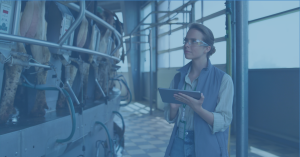
Advanced robotics for milking, feeding, and cleaning, programmed to respect animals’ natural rhythms and minimize handling stress.
The ultimate goal is precision medicine applied to livestock farming: each animal becomes a unique individual with specific needs, monitored and cared for with personalized approaches.
Architecture for Welfare: When the Building Becomes Therapeutic
Dutch innovation goes beyond technology, rethinking animals’ living spaces entirely. New structures are designed according to principles of bioclimatic architecture and applied ethology.
Modern buildings feature revolutionary characteristics:
Modular and flexible spaces that can be adapted to different production phases and seasons, with movable walls, variable heights, and specialized functional areas.
Enhanced natural ventilation systems that harness the chimney effect and prevailing winds, integrated with smart fans that activate only when needed, reducing energy consumption by 40%.
Innovative surfaces and materials such as self-cooling floors, high-performance natural insulation, self-cleaning surfaces, and sound-absorbing materials that create a quiet, comfortable environment.
Behavioral enrichment areas specifically designed to stimulate the natural behaviors of different species: covered grazing areas for cattle, rooting zones for pigs, perches and nesting areas for poultry.
Intelligent light management with programmable LED systems that perfectly simulate natural day-night and seasonal cycles, supporting animals’ circadian rhythms and optimizing hormonal production.
Species-Specific Specialization: A Tailored Approach
The true excellence of Dutch farms lies in their ability to adapt technologies and strategies to the specific needs of each species, and even each breed and genetic line.
Cattle Sector: Dairy Excellence
In dairy farming, the Netherlands has developed highly sophisticated systems for monitoring thermal comfort. Beyond the traditional THI (temperature-humidity index), factors such as solar radiation, air speed at animal level, and even individual thermal perception are considered.
Next-generation milking robots do more than milk: they perform a real health check at every session—analyzing the electrical conductivity of milk to detect subclinical mastitis, weighing the animal, assessing milk quality in real time, and automatically adjusting milking parameters.
Stalls and resting boxes use thermoconductive materials that adapt to body temperature, while automatic rotating brushes not only provide comfort but also stimulate blood circulation and maintain constant coat cleanliness.
Pig Farming: Technology Serving Natural Behavior
In pig farming, innovation focuses on enabling natural behaviors while maintaining high hygiene and health standards. Environmental enrichment systems are required by law, but Dutch farmers have gone further, developing creative and functional solutions.
Farrowing rooms use individually controlled heated nests for piglets, laminar airflow ventilation systems to prevent harmful drafts, and floors with zones at different temperatures so animals can choose their preferred microclimate.
Computerized liquid feeding systems deliver personalized rations based on weight, age, physiological state, and even individual preferences, reducing waste and optimizing feed conversion.
Poultry Farming: Technological Precision for Sensitive Species
In poultry farming, where stocking density is high and environmental sensitivity is at its peak—Dutch technology achieves millimetric precision.
Ventilation systems use CO₂, fine dust, and humidity sensors distributed throughout the facility, with automatic controls regulating specific airflows for each zone. Programmable LED lighting not only cuts energy use by 80% but also stimulates specific behaviors such as laying, feeding, and resting.
Modern poultry facilities integrate automatic egg collection with real-time quality grading, automatic removal of dead animals, and dynamic weighing systems to monitor growth without handling stress.
The Farmer 4.0: From Caretaker to Data Scientist
The professional role of the farmer has been completely redefined. The modern Dutch farmer is a highly qualified manager combining traditional livestock skills with data analysis abilities, complex system management, and predictive algorithm interpretation.
Continuous training is key: specialized university courses, constant technological updates, participation in international innovation networks. Many farmers hold degrees in agricultural sciences, veterinary medicine, or engineering, and work actively with research centers.
Available tools include customizable dashboards integrating data from dozens of different sources, early-warning systems based on machine learning, and simulation software allowing virtual testing of different management decisions.
The ability to interpret and use big data has become crucial: each farm generates terabytes of information every year, which must be filtered, analyzed, and transformed into concrete actions to improve animal welfare and production efficiency.
Integrated Sustainability: Welfare, Environment, Economy
The Dutch approach proves that animal welfare, environmental sustainability, and economic efficiency are not competing goals but synergistic elements of a virtuous system.
Environmental results are impressive: a 60% reduction in antibiotic use over the last ten years, a 30% decrease in ammonia emissions per unit of product, and a 25% optimization in water and energy use. These improvements stem directly from the focus on animal welfare: healthy animals require fewer drugs, optimal environments reduce energy waste, and natural behaviors minimize stress and related diseases.
The economic system rewards this excellence: Dutch products certified for animal welfare achieve a 20–40% premium price in international markets, insurance companies offer discounted rates to farms with advanced monitoring systems, and public funding favors innovative projects in animal welfare.
Transparency and Traceability: From Barn to Table
One of the most significant innovations is total traceability systems that allow each product to be tracked from the individual animal to the point of sale. Using blockchain, RFID, and QR codes, consumers can access detailed information on rearing conditions, treatments received, feed provided, and even view real-time videos from farms.
This radical transparency has transformed the relationship with consumers, building trust and allowing farmers to communicate directly the added value of their production methods. Dedicated mobile apps let consumers “virtually meet” the animals from which their purchased products originate.
Voluntary certifications such as Better Life (with different stars for increasing welfare levels) and PlanetProof (integrating environmental and social sustainability) have become essential tools for competitive differentiation in European and global markets.
Looking Ahead: The Frontiers of Innovation
Dutch research continues to push boundaries. Pilot projects are testing the use of virtual reality to reduce stress during transport, nanotechnologies for controlled nutrient release, precision genetics to develop more resilient and welfare-friendly lines, and even synthetic pheromones to improve environmental comfort.
Integration with precision agriculture is creating closed circular systems where livestock effluents are processed through anaerobic digestion to produce biogas, residues are used as organic fertilizers for crops, and agricultural by-products return to farms as feed, creating a virtuous cycle with minimal environmental impact.
A Model for Europe
The Dutch experience shows that animal welfare can be the catalyst for a positive revolution in the entire livestock sector. The principles and technologies developed in the Netherlands are already being adopted in other European countries, adapted to local conditions.
Italy, with its excellent livestock tradition and growing focus on quality, can learn important lessons from this model. Many technologies are already available and applicable, R&D investment is increasing, and Italian consumers’ sensitivity to animal welfare is steadily growing.
The path charted by the Netherlands is concrete proof that another type of livestock farming is possible: more ethical, more sustainable, more efficient. A livestock sector that puts the animal at the center as a living being worthy of respect and appropriate care.
The Future is Already Here
Innovation in Dutch farms proves that when science, technology, ethics, and entrepreneurial vision converge, results can exceed all expectations. Animal welfare has proven not to be a luxury for wealthy societies, but a strategic investment to build a resilient, competitive, and sustainable livestock sector.
The Dutch example lights the way toward a future where producing well also means producing with respect. Because, as Dutch farmers demonstrate daily, taking care of animals is the best way to take care of our future. Request a demo to follow their example.
For more: