Introduction
In recent years, the topic of animal welfare in livestock farming has become central — a core principle, a point of debate, and, fortunately, an increasingly recognized priority. This is because it’s no longer just an ethical option or something only specialists talk about. Today, animal welfare is a necessity from every point of view.
Farmers who prioritize welfare see better performance, stay compliant with the law, and earn the trust of consumers.
But what does “animal welfare” really mean in modern farming? In this article, we explore two complementary perspectives: that of a farmer, who experiences the day-to-day reality in the barn, and a scientist, who studies and measures how environmental and management factors impact the health of animals and the surrounding ecosystem.
Regulations and Definitions, How the Concept of Animal Welfare Was Born
Until the 1990s, attention to the living conditions of farm animals was minimal and barely regulated. But public awareness has changed, and institutions have started to take concrete action.
The European Union in particular has established a strong and structured framework over the past 20 years:
- Directive 98/58/EC, general principles for the protection of farm animals, including living space, access to food, medical care, and natural behaviors. Read the full text
- Directive 2008/120/EC, specific rules for the welfare of pigs, including density limits, environmental enrichment, and restrictions on tail docking. View the document
- Directive 2007/43/EC, requirements for broiler chickens, covering ventilation, litter quality, and lighting. Learn more
- Regulation 2017/625/EU, a control system to ensure compliance with animal welfare legislation. Read the regulation
In Italy, Directive 98/58/EC was implemented through Legislative Decree 146/2001, which outlines penalties and responsibilities for farmers.
Globally, the leading reference is the World Organisation for Animal Health, which sets updated international standards on welfare, transport, slaughter, and biosecurity.
The Farmer’s View, Between Practicality and Sensitivity
A Routine Built on Observation and Small Actions
Animal welfare is not a slogan, that’s something every farmer knows deep down.
In this kind of work, attention is in the details: checking the temperature, noticing unusual smells, observing whether the animals eat less or rest more. And acting immediately when something is off.
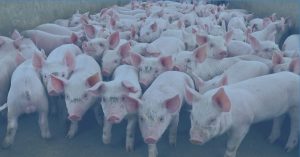
A farmer’s daily routine involves checking key environmental parameters: ventilation, humidity, light, and noise. But it also requires interpreting animal behavior. If pigs crowd together, refuse food, or show aggression, something is wrong. The same applies to every species.
So caring about welfare not only improves the animals’ quality of life, it also improves the farm’s bottom line:
- Fewer respiratory illnesses
- Less antibiotic usage
- More consistent growth and lower mortality
Experience is undoubtedly a crucial skill. But what happens when farms grow larger, or when not all staff have the same level of experience? Or when small distractions cause missed signs?
The Scientist’s Perspective, Measuring Welfare
This is where science enters the picture.
Welfare can be measured. Today, we have tools that allow us to continuously and reliably read both physiological and behavioral signals.
The main indicators include:
- Physiological parameters (cortisol levels, respiration rate, body temperature)
- Environmental data (ammonia, CO₂, humidity, PM10)
- Behavioral patterns (movement, social interaction, vocalization)
Modern farms now have access to:
- IoT environmental sensors
- Automated systems
- Smart video cameras with AI
These tools, integrated with cloud platforms, allow for real-time, responsive monitoring.
Multiple European studies confirm that farms that invest in animal welfare experience higher growth rates, fewer clinical cases, and reduced environmental impact. This is no longer a theory, it’s an industrial reality.
Where Science and Practice Meet
The turning point is technology at the service of decisions. Environmental data collected by platforms like Cynomys makes it possible to:
- Automatically activate ventilation
- Detect ammonia or CO₂ threshold exceedances
- Evaluate the effectiveness of corrective actions in real time
Benefits for Everyone
Animals live better, get sick less often, and are more productive.
Farmers achieve better performance, waste less, and become more competitive.
Consumers get healthier, traceable, and certified products.
Today, animal welfare is also a communication tool. Brands and retailers reward farms that are transparent and data-driven in their commitment to quality.
A Shared Vision
In 2025, animal welfare is no longer a luxury. It is a technical requirement, a moral responsibility, and an economic opportunity. And most importantly, it is achievable.
You don’t need to change everything overnight. What matters is to start, measure, understand, and improve, step by step, together.
Want to explore how to bring smart environmental monitoring into your farm?
Request a free demo today at