
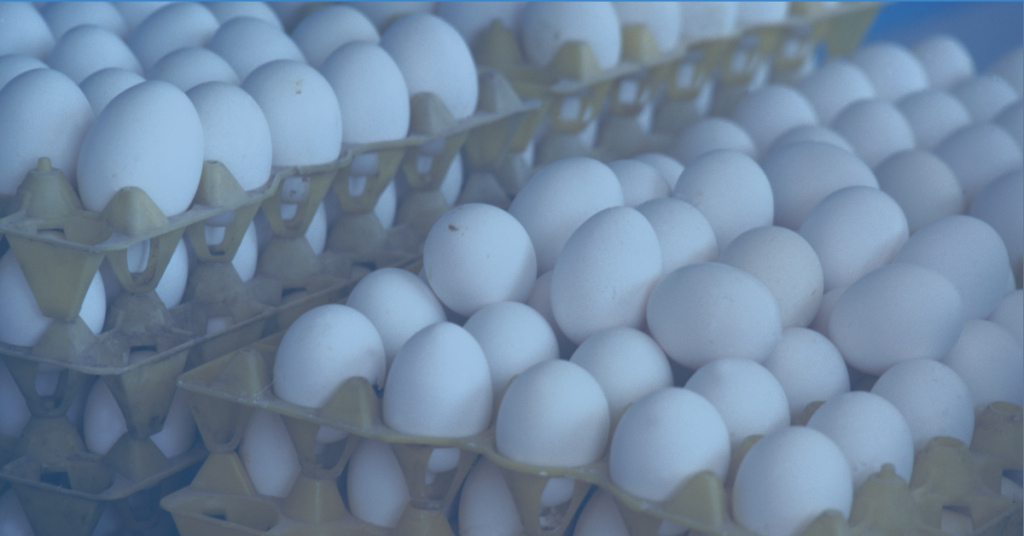
When we stand in front of the egg shelf at the supermarket, we often let price or attractive packaging guide our choice. However, choosing eggs should be a more informed process, because behind every carton lies a world of quality, farming methods, food safety, regulations, and environmental sustainability.
Understanding how to read the codes printed on the shell, where the eggs come from, and what differentiates the various types is essential for making responsible and informed purchases.
We’ve decided to break down all the main aspects: what the numbers on eggs mean, which controls are carried out, how to distinguish farming methods, what information is mandatory, and how to recognize a truly high-quality product.
The Code Printed on the Shell: the Egg’s “Identity Card”
Every commercialized egg must have a code printed on its shell. This code tells you exactly where it comes from and how the hen was raised.
The code follows a mandatory structure established by European Union regulations, and consists of several parts.
1) The Initial Number: Type of Farming Method
It can be:
- 0 = organic
- 1 = free-range
- 2 = barn-raised
- 3 = caged
Let’s look at them in detail.
0 – Organic Eggs
Hens live outdoors, eat organic feed, and have greater freedom of movement. They are considered the most sustainable option.
1 – Free-range Eggs
Hens have access to outdoor areas, although they still belong to an intensive farming system.
2 – Barn-raised
Hens do not live in cages but stay indoors. They enjoy more freedom than caged hens, although space can still be limited.
3 – Caged Eggs
The most intensive system, with limited space and lower animal welfare. These eggs are the cheapest but also the least ethical choice.
2) Country Code
This comes after the farming number:
- IT = Italy
- FR = France
- DE = Germany
and so on.
3) ISTAT Province Code
A numerical code identifying the province where the farm is located.
4) Municipality and Farm Code
The final part of the code identifies the specific farm.
This ensures complete traceability, both nationally and internationally — you can track the exact point of origin of the eggs.
What Does the Date on the Carton Mean?
You will find:
- the laying date (if indicated)
- the expiry date or best-before date (“best before”).
Fresh, Extra Fresh, or Category A and B Eggs
Eggs sold for household consumption belong to Category A. They are considered fresh because the shell is intact, they are not washed, and they are suitable for direct sale.
Category B includes eggs that are not suitable for retail sale. These are destined for the food industry or processing and do not appear on supermarket shelves.
Within Category A, eggs may be labeled “extra fresh” if laid less than nine days before sale — ideal when very fresh eggs are needed.
Pasteurized Eggs: When to Choose Them
Supermarkets also sell pasteurized eggs in liquid form (whole egg, whites, yolks).
Pasteurization reduces microbiological risk, making these products especially useful for recipes that require raw eggs or when cooking for many people.
They are ideal for dishes such as tiramisù, zabaglione, mayonnaise, or carbonara, where the egg may not be heated enough to eliminate bacteria.
Does Shell Color Matter?
It depends on the hen’s breed, not on quality.
There is no nutritional difference related to shell color.
Small, Medium, Large Eggs: How to Choose?
Eggs are classified by weight:
- S = less than 53 g
- M = 53–63 g
- L = 63–73 g
- XL = over 73 g
This is not an indicator of quality but simply helps with portioning and recipe measurements.
The Nutritional Value of Eggs
Eggs are considered nutritious because they provide high-quality “complete” proteins, as well as fat-soluble vitamins such as A, D, E, and K.
They are also one of the main natural sources of vitamin B12 and contain valuable minerals like iron and choline, which supports the nervous system.
Although eggs are high in cholesterol, they are no longer considered harmful for healthy individuals when consumed in moderation within a varied diet.
How to Tell if an Egg Is Fresh
A simple home trick is the water test. Place the egg in a glass of water:
- A very fresh egg sinks.
- A less fresh but still edible egg may stand slightly upright.
- If the egg floats, it has lost too much internal moisture and should not be eaten.
Origin and Supply Chain Controls
In Italy, egg production is subject to strict controls and a traceability system that allows precise identification of the farm of origin.
Italy has one of the most rigorous inspection systems in Europe, although quality can vary depending on farming type, stocking density, and hen welfare conditions.
Sustainability: a Conscious Choice That Involves the Entire Supply Chain
Eggs are a protein source with a generally lower environmental impact than other animal proteins.
However, their actual footprint depends on many factors: farming method (barn, free-range, organic), environmental management, feed quality, stocking density, and technologies used to improve both animal welfare and sustainability.
Many modern farms — even intensive ones — are adopting innovative solutions such as continuous environmental monitoring, which helps improve hen welfare and reduce environmental impact.
Those who want to make a more sustainable choice can:
- choose eggs labeled 0 or 1 (organic or free-range);
- check the origin and farming method on the label;
- verify freshness (laying or packing date);
- use pasteurized eggs for raw preparations;
- store eggs properly in the refrigerator to ensure safety over time.
Each egg carries its own story, and knowing the production context helps value the work of those striving for more sustainable, ethical, and transparent farming. This is why the entire supply chain — from producers to consumers — must work together to build a more responsible food future.
Conclusion
Learning how to read egg labels and distinguish between the various types means making choices that prioritize food safety, animal welfare, and environmental sustainability.
In this way, a simple daily action — placing a carton in your shopping cart — becomes a responsible and more conscious decisions.