Introduction
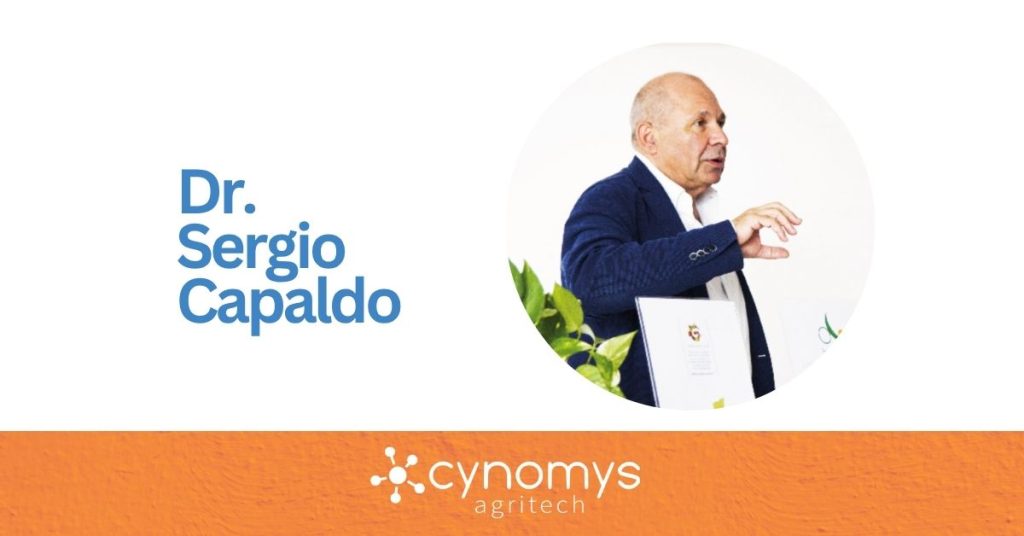
Veterinarian, breeder, and founder of La Granda, Sergio Capaldo has long been one of the most authoritative voices in Italian livestock farming. With his vision and an approach that places the relationship between soil, animals, and the environment at its core, he has helped spread a new culture of animal welfare—one in which quality and sustainability are not opposing ideas, but parts of a single balance. In this interview, Capaldo explains how the relationship between farmers and the environment has evolved over time, what challenges lie ahead for the sector, and why true innovation always begins with nature.
Over your years working closely with farms, what has been the most evident change you’ve seen in the relationship between the farm environment and animal health?
In recent years, compared to when I practiced as a veterinarian, I’ve noticed a major shift: farmers today are much more aware of the importance of space and stable ventilation. Almost all have now moved from tethered housing to open pens, meaning the animals are no longer tied up. Another important step has been the change in agricultural systems within some farms: manure is now better managed, with attention to its proper maturation—a natural fertilizer that is a true ally of soil biodiversity. Not all, but many have also made significant progress in managing calf housing, which represents the foundation of the entire farming operation.
Much is said about nutrition and genetics, but less about air quality. From your experience, how important are parameters like ammonia, fine dust, and CO₂ in the animals’ daily lives?
From our experience, it’s clear that oxygen and clean air are essential for animal growth and well-being. I’ve seen it firsthand in many farms: in poultry houses and rabbit barns, for example, excess ammonia irritated the animals’ airways and caused recurring diseases. Improving air quality led to a marked improvement in health, because ammonia—heavier than air—accumulates near the ground, at nose level, irritating mucous membranes and promoting the entry of pathogens such as Pasteurella. The same goes for calves: well-ventilated calf barns, with clean bedding and adequate space, promote faster growth, earlier weaning, and much better performance. The same applies to suine: animal welfare always translates into tangible benefits.
Can you share a case where an “invisible” problem in a farm—perhaps linked to ventilation or air quality—had a significant impact on animal health or productivity?
I recall a striking case that completely transformed a farm. A farmer kept his calves in an old barn—after building a new one for the cows—which caused two main problems: poor air exchange and the presence of environmental pathogens that couldn’t be eliminated simply with lime. When we built a new calf barn, more ventilated, cleaner, and with fresh straw, calf performance changed dramatically. Another very illustrative example concerns rabbits raised in stacked cages: those on the upper levels grew better and faster than those below, simply because they breathed cleaner, oxygen-rich air.
Summers are becoming longer and hotter. From your professional experience, what are the main signs of heat stress in animals, and what solutions have you seen work best?
Among the most effective technical solutions are ventilation fans: they don’t spin at high speed but help reduce ammonia emissions from urine and feces, keeping the environment cooler and improving air circulation. This has been a major success. Some also use water misting systems for cooling, but fans remain the most efficient solution. Nutrition also plays a key role: during periods of intense heat, it’s best to avoid highly fermentable rations. In this sense, automatic feed dispensers—which prevent feed from sitting too long in the trough—help avoid unwanted fermentations and maintain good digestibility.
Today, nearly everything can be monitored in real time. From a clinical perspective, how does having constant data on microclimate and animal welfare compare to traditional observation?
Having reliable, measurable data allows us to avoid purely emotional or subjective evaluations. I believe monitoring should be standard practice: it’s essential to have verifiable and economically sustainable data, crucial to understanding the correlation between air quality, disease occurrence, and animal performance.
Artificial intelligence and predictive systems are increasingly being discussed. Do you see them as tools that can support veterinarians, or as technologies that might replace some of their skills?
A veterinarian must have a holistic view of the whole system—he cannot limit himself to treating individual animals. Today, it’s team work, alongside agronomists and biologists, through shared assessments. Of course, a veterinarian must be capable of treating individual cases, but analyzing group pathologies is what really matters. For this reason, we need tools that monitor air and water quality and the animals’ hydration levels. Artificial intelligence can help us process data quickly, but it must always be interpreted by humans—with the clinical eye capable of “seeing” the group as a whole. The same happens in human medicine: a doctor must have the sensitivity to interpret symptoms and connect them with other findings.
In France, consumers can find a letter grade from A to E on animal welfare (the much-debated Nutri-Score). How do you view this form of communication?
Where animal welfare is truly cared for, farmers deserve to be rewarded for their commitment. However, the criteria used to evaluate welfare are sometimes questionable, as they’re based on parameters that are more anthropocentric than realistic. We must truly understand the animals’ ethology: it’s not just about facilities, but above all about feed quality, which is too often overlooked. If I had to identify a priority parameter, it would be this: feed quality. A feed free of acidity correctors, for example, is a sign of genuine well-being. An animal suffering from acidosis due to overly intensive diets cannot be considered in a state of welfare.
There is growing talk about farms that can “give back” to the environment, improving soils and biodiversity. From your professional standpoint, do you see this as utopia or a concrete path?
It’s a very concrete path, one we’ve already implemented in many farms with excellent—also economic—results. Healthy animals come from good agriculture: environmental and feed quality depend on farming practices such as proper fertilization, minimal soil tillage, the use of cover crops, and the sowing of forage plants that help regenerate the land. All of this improves forage quality and, consequently, animal performance. By maintaining balance between environment and animal, both the ecosystem and farm profitability improve. Over the past twenty years, we’ve seen milk production rise, veterinary interventions decrease, fertility increase, and mortality rates fall. These are the real economic results, because profitability should be measured on the objective quality of products and the animal’s entire life cycle, not just its two or three productive years.
Many farmers see sustainability as a cost. Can you give an example where improving animal welfare resulted in a true economic benefit?
I began working with the Piemontese cattle breed at a time when it was difficult to fatten animals before 19–20 months of age, despite using feed rich in protein, carbohydrates, and fats. The issue partly stemmed from the fact that the Piemontese rumen is smaller than that of other breeds. We changed our approach, focusing on high-quality, highly digestible raw materials, starting with soil fertilization using natural biostimulants and mycorrhizae. We built a system centered on the animal’s natural digestion. Today, these cattle reach the same weight at 15–16 months, with significantly improved performance and fewer diseases—even in the calf barn. That’s the real economic return.
Looking ahead to 2035, what do you think will be the greatest challenge for veterinarians and animal health: managing climate change, maintaining economic competitiveness, or integrating technology?
The goal is to integrate technology to improve the quality of meat and milk, which should also be assessed through objective parameters such as polyphenol and antioxidant content. Once again, everything begins with feed quality and the environment in which animals live. If we change agronomic techniques and enhance soil value—avoiding land abandonment—animals can play a key role in restoring areas now facing desertification. It’s a food chain that makes no sense to interrupt: if properly managed, it gives back to the land its original biodiversity and vitality.
Conclusion
From Sergio Capaldo’s words emerges a vision that unites science, ethics, and agriculture: animal welfare is not a technical detail, but an economic and cultural principle. According to Capaldo, sustainable livestock farming is not only possible—it represents the true evolution of the sector: a system where air, soil, and animals coexist in harmony, restoring quality to food and life to the earth.