
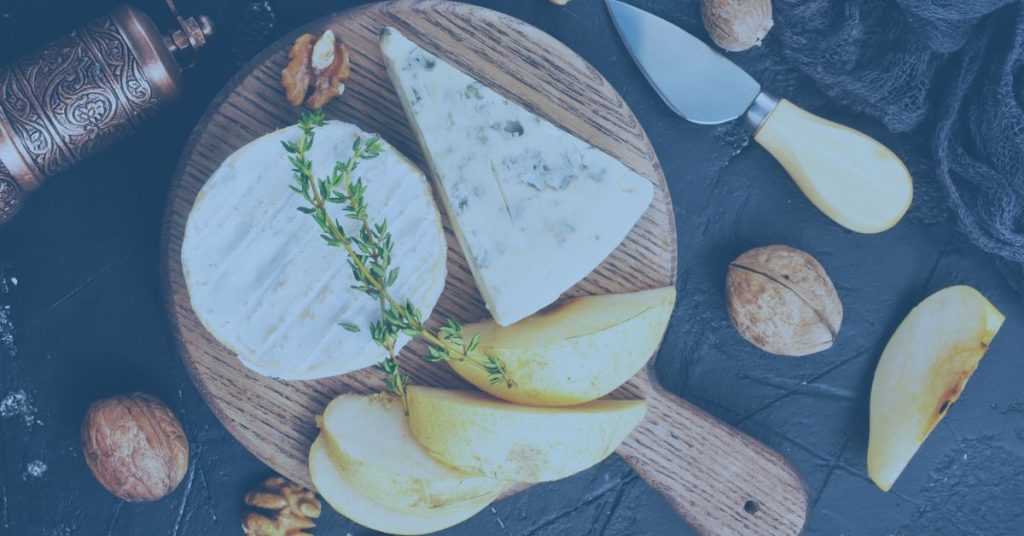
Cheese is one of the oldest known foods, a story, a glimpse into the gastronomic life of humans throughout the centuries. Each individual wheel tells a millennial tale of pristine landscapes, changing climates, lush flora, and, of course, the skilled hands that, generation after generation, transform milk into masterpieces. From pasture to table, an infinite number of micro-environmental variables sculpt the sensory profile of every caciotta, ricotta, or aged cheese.
But what truly makes the taste of a cheese unique? How much does the imprint of the territory weigh? And, above all, can modern technology be an ally in enhancing this diversity, rather than nullifying it?
The Environmental DOP: How Nature Shapes Taste
The indissoluble link between cheese and the environment is profound and manifests itself through factors that, often invisible, are the true architects of taste.
Climate and Geography: The First Painters of Flavor
Imagine a cheese ripening under the scorching sun of southern Italy compared to one resting in the crisp air of the Alps. Climate, with its variations in temperature and humidity, is a silent conductor of biochemical reactions. A warm environment accelerates the development of intense aromas, while in the mountains, aging is slower, yielding delicate and complex flavors.
It’s no coincidence that many of the most famous cheeses, from French Comté to Pecorino Sardo, have roots in mountainous or hilly environments. Here, the microclimate and biodiversity create the perfect conditions for rich and inimitable production.
In the era of mass production, standardization risks flattening sensory variety. Rediscovering the concept of terroir (borrowed from the world of wine) is essential to protect and enhance local food identities. It’s not just a matter of taste, but of cultural preservation.
Humidity and Temperature: The Natural “Cellars”
Every cheese needs its ideal “climate” to mature. More humid and cool environments are the cradle of cheeses with bloomy rinds or noble molds, such as Brie or Roquefort. Conversely, a drier, more temperate climate is the ideal habitat for aging hard cheeses, like Grana Padano or Manchego.
Today, controlled aging cells allow these conditions to be artificially replicated. But replicating is one thing, equaling is another. There are intangible elements, such as natural air currents or specific microbial strains from ancient cellars, that evade perfect reproduction, giving that unique and unrepeatable touch.
Soil Composition: The Invisible Nourishment
“You are what you eat” also applies to livestock. Soil composition directly influences the quality of grass and hay, and consequently, the composition of the milk. Soils rich in limestone, for example, impart a higher mineral content to the forage, enriching the milk with substances that will explode in flavor during aging.
Parmigiano Reggiano is a prime example: much of its identity comes from the Emilia hills, with their soils naturally rich in calcium and magnesium.
The protection of areas of origin, as in the case of DOPs (Protected Designation of Origin), is a true environmental and cultural conservation strategy, a bulwark against homogenization.
Local Vegetation: A Bouquet of Aromas in the Milk
Every herb, every wild flower ingested by livestock is a brushstroke that paints the aromatic profile of the milk. In open pastures, wild flora can include aromatic herbs, alpine flowers, clovers, or junipers, all elements that are reflected in the taste of the cheese in ways that no chemical formula can replicate.
Consider the goats of Provence that feed on lavender and wild thyme: their milk gives local cheeses unmistakable vegetal and floral notes.
The Microbial Environment: The Invisible Masters of Transformation
The true artisans of cheese, often invisible, are microorganisms: bacteria, molds, and yeasts. Each territory hosts a unique microbial flora, which influences the type of fermentation and the resulting flavors. The famous Roquefort caves, for example, are home to unique strains of Penicillium roqueforti, responsible for the iconic blue veins and pungent taste.
Today, it’s possible to inoculate these strains in the laboratory, but the charm of a product born in symbiosis with a specific environment, with its microbial “fingerprint,” remains unparalleled.
The Seasons: The Cycle You Can Taste
Milk is never static: it changes with the seasons, with the animals’ diet, and with their physiological state. In spring and summer, the abundance of fresh grass produces richer, more fragrant milk. In winter, the use of preserved forage can reduce aromatic complexity.
This translates into the seasonality of cheeses: many traditional products were (and still are) made only during specific periods of the year, enhancing their uniqueness linked to the natural cycle.
In an era where everything is available anytime, anywhere, there is still room to educate consumers about the intrinsic value of seasonality, rediscovering the pleasure of waiting and rediscovering.
Tradition and Innovation: Technology in Service of Authentic Taste
Reconciling ancient cheesemaking wisdom with modern innovations is a creative challenge that can lead to extraordinary results.
Cynomys: A Bridge Between Data and Flavor
Cynomys Livestock System is a concrete answer to this challenge: a cutting-edge platform that monitors fundamental environmental parameters for livestock farming and cheese production, such as temperature, humidity, and ammonia levels.
Thanks to smart sensors and real-time analysis, the system allows breeders to optimize the environmental conditions in which the animals live.
Technology, when used with vision, can become a powerful tool to preserve diversity, improve sustainability, and ensure a future for authentic flavors.
Would you like to discover how Cynomys can elevate the quality and authenticity of your cheese production?