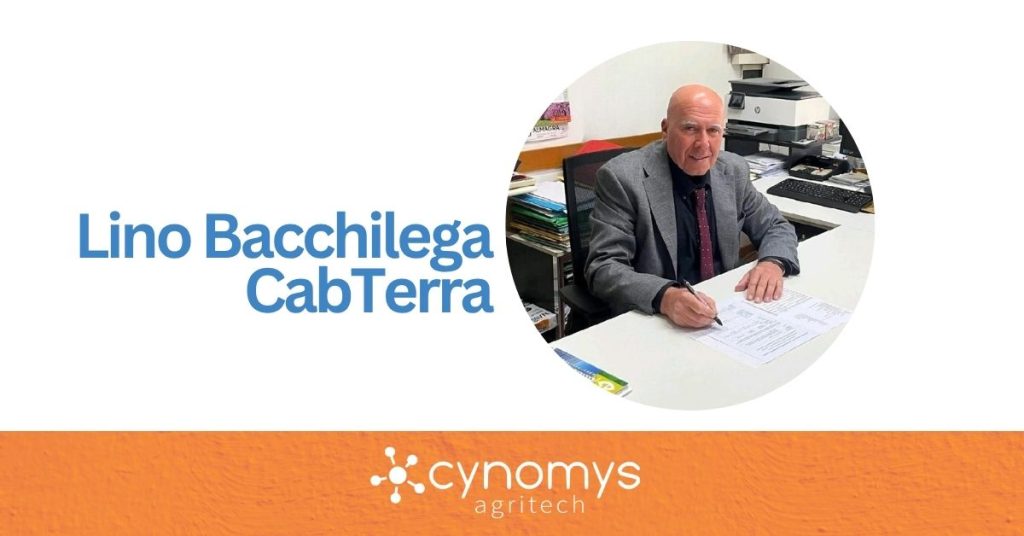
Microclimate management is becoming the central pillar of modern animal husbandry. In this interview, Lino Bacchilega, General Manager at Cab Ter.ra, explains how the constant control of “invisible” parameters can be transformed into the primary tool for health prevention and productive success, sharing his vision and direct experience in the field.
In your years of work on the farm, what has been the most evident change you have observed in the relationship between the barn environment and animal health?
My experience does not span decades, but what I have noticed is that if we provide animals with welfare-oriented environmental conditions, the result is that “the optimal environment is the primary veterinary tool.” In short, we will have fewer health issues to manage from a medical perspective.
There is much talk about nutrition and genetics, but less about air quality. How much do parameters like ammonia, fine dust, and CO₂ actually affect daily management and productive performance?
Unfortunately, we deal with genetics for better or worse. To give you an idea: at all levels, regarding endangered breeds, we ask that genetics help us restore those resistances—once found in working farm animals—that we no longer see today, as we now find ourselves with increasingly weak animals. Since we cannot intervene directly on this, monitoring environmental parameters has allowed us to take a step forward in reducing respiratory pathologies. Imagine what could be achieved if we could combine this with “appropriate genetics.”
Can you tell us about a case where an “invisible” problem in the barn – perhaps related to ventilation or microclimate – had significant effects on health, welfare, or productivity?
This was the biggest surprise: we imagined fans could influence the presence of flies, but not that they would change our methods and timing for cleaning the barn itself. In this way, we reduced respiratory issues in just a few steps, while also slightly increasing productivity. Yes, as mentioned, it was an invisible problem that we made “visible” through the monitoring of environmental parameters.
Summers are getting longer and hotter. What do you notice in the animals when they are under heat stress? And what solutions have you adopted that truly worked in practice?
This is where the equipment we installed comes into play: fans, curtains, and monitoring. This mix of installations allowed us to implement effective responses to counteract the heat and, consequently, heat stress. We still have one step to take, which is water cooling. However, with the action of the fans—which adjust their speed based on temperature and gases to ensure maximum comfort for the animal—and the curtains, we can avoid exposing the feed ration to the sun during the hottest hours and protect the animals from strong direct winds.
Today it is possible to monitor many parameters in real time. What changes when you have constant data compared to management based only on experience and observation?
I might have mentioned this, but unfortunately, experience and observation alone are not enough to understand which correct actions must be taken to achieve truly effective welfare. The human eye gradually gets used to small declines: microclimate sensors eliminate this “habituation drift.” While human observation detects heat stress only when the animal is already panting, THI index data allows us to activate cooling systems preventively. Instead of having to visually check every single head of cattle, the farmer can focus on the “attention lists” generated by the system. This way, we stop saying, “we’ve always done it this way.”
There is increasing talk about artificial intelligence and predictive systems. Do you see them as useful tools or technologies still far from daily reality?
I would say we are still a bit skeptical on this topic, but I think it could help us immensely in pathology prevention and in anticipating certain maneuvers by interpolating barn data with external environmental data. Regardless, AI will not replace the farmer; it will help them make decisions.
In France, consumers find an A to E rating for animal welfare on labels. How do you view this type of communication?
I don’t know, one would have to be inside the consumers’ heads… I think that unfortunately, in this historical period, consumers are bombarded with too much information. Certainly, labeling or perhaps a QR code could better differentiate a super-intensive farm from one with higher animal welfare quality.
There is more and more talk about farms capable of “giving back” value to the environment. Is this a concrete vision for you or still distant?
Yes, for me, this is fundamental for agriculture-environment-biodiversity, but the public opinion seems still distant. When I hear that the barn “stinks” or the manure has an impossible smell, yet people want a house in the countryside, there is a strong conflict. Certainly, better management of barns and waste could improve things, but when the citizens’ response is “don’t do it near my house,” we are not on the right track…
Sustainability is often perceived as a cost. Can you share an example where welfare translated into a real economic advantage?
It’s like safety: the reality is that it is a cost, but it transforms into advantages. The cost incurred by the investments made is offset by fewer respiratory pathologies, which in practice means fewer deaths, and we have also seen a productive increase. It is obvious that every investment must be calibrated and measured against one’s own reality, moving step by step alongside capable consultants.
Looking ahead to 2036, what do you think will be the biggest challenge for your farm?
Ten years is hard to predict! I hope we are still operating, but I must think about producing quality meat with the goals we mentioned: giving value back to the environment and improving soil and biodiversity. Technology will increasingly be at the service of mankind, and we must be able to “bring to the ground” all these messages to keep the barn at the top in terms of Animal Welfare and Environmental Safety.