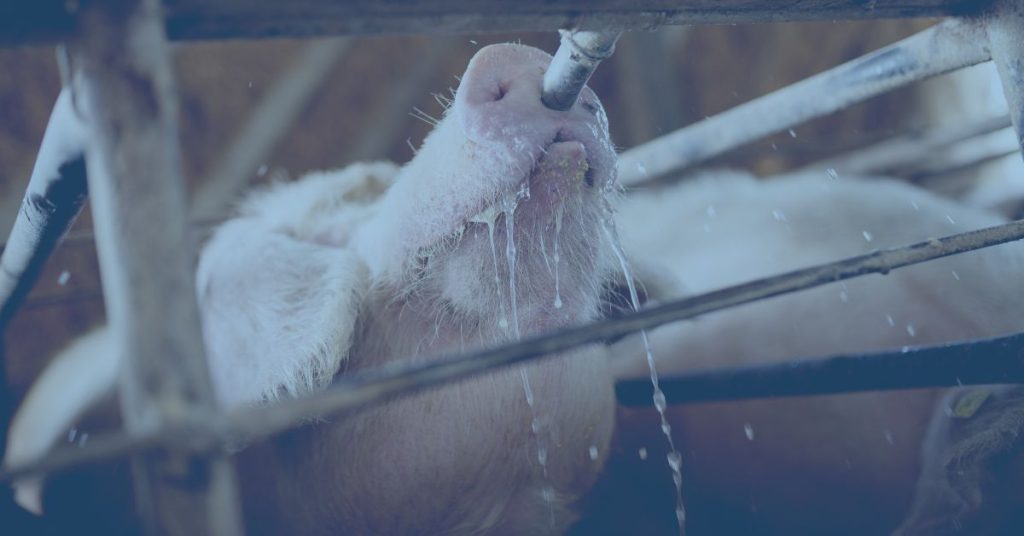
Heat stress problems also affect pig farms and can cause severe animal discomfort that affects productivity. Heat is one of the environmental factors that impacts livestock farms and the welfare of farm animals. Pigs also suffer in extreme heat conditions. Here are some steps to prevent heat stress damage in pig farming.
Let’s start by saying what is meant by heat stress: it is a physiological condition that occurs when the animal’s production of endogenous, i.e., internal and own heat and that absorbed from the environment is greater than the animal’s ability to dissipate heat.
Read also: Heat stress in dairy cattle: how to prevent it
Consequences of heat stress in pigs
Heat stress negatively affects the global pork industry and undermines genetic, nutritional, management, and pharmaceutical advances in management, feeding, and reproductive efficiency. Specifically, heat stress-induced economic losses result from poor sow performance, reduced and inconsistent growth, decreased carcass quality, mortality, morbidity, and processing problems caused by less rigid adipose tissue (also known as brittle fat)*.
A U.S. study has attempted to determine the losses in economic terms due to heat stress in pigs. Although it is difficult to determine precisely, a recent estimate suggests that poor performance of sows alone (excluding reduced offspring growth, carcass quality) costs the U.S. swine industry $450 million annually*.
Research conducted on the physiological response of pigs subjected to heat stress (in environments with temperatures above 35° for more than 24 hours) has shown that the intestine is one of the most problematic organs: heat stress reduces the integrity of the intestinal barrier and promotes intestinal glucose transport in growing pigs.
A pig subjected to heat stress comes to have a drop in body weight of up to 2 kg in one day due to decreased feed intake-a natural response of the animal that reduces food consumption (feed or swill) to decrease heat production due to digestion.
In sows, moreover, heat stress causes a decrease in milk production that affects the growth of piglets after birth and a major decline in feeding with consequences for the subsequent reproductive cycle.
Remedies in pig farms
Some practical steps in managing farm space can help reduce heat stress and its negative effects on animals.
Controlled and adequate ventilation as temperatures rise can greatly impact the health of pigs under heat stress. Cooling through various methodologies (air, water, evaporative, localized) helps to lower the temperature and give the animal relief during the hottest times.
The monitoring of environmental parameters is essential to prevent heat stress situations; it also helps regulate cooling systems by avoiding waste and taking timely action on malfunctions.
Space management can be a strategy in managing excessive temperature in the barn. A reduction in room occupancy prevents further temperature rise during warmer periods.
Monitoring drinking water by lowering the temperature is an essential intervention to prevent heat stress and reduce infections or their occurrence in pigs.
Preferring less hot times of the day to feed animals and taking some nutrient precautions, such as: adding vitamin E, reducing fiber content and increasing energy value in feed, can further increase animal welfare.
sources:
* Physiological consequences of heat stress in pigs J. W. Ross. J. Hale, N. K. Gabler, R. P. Rhoads, A. F. Keating and L. H. Baumgard.
https://journals.plos.org/plosone/article?id=10.1371/journal.pone.0070215